How to Train Your Cat, Prevent Bad Behavior, & Keep Them Mentally Stimulated
Cats can absolutely be trained—just not the same way dogs are. The goal isn’t obedience.
It’s communication: teaching your cat what works in your home (and giving them safe ways to burn energy, solve “cat problems,” and stay confident).
This cat information page is your hub for:
Training basics (yes, even for adult cats)
Healthy play routines that reduce biting, nighttime zoomies, and boredom behaviors
Mental stimulation ideas that keep indoor cats engaged without overwhelming them
Gentle handling skills (carrier, nail trims, harness)
Everything here uses cat-friendly methods: reward-based, low-stress, and safety-first.
RELATED CAT TRAINING & PLAY GUIDES
(Explore detailed guides below)
Training for Kittens vs Adult Cats (What Changes, What Doesn’t)
Fixing Common Training Problems (Biting, Swatting, Ignoring Cues)
QUICK ANSWERS
Can cats be trained?
Yes. Cats learn by consequences and repetition. The fastest, safest method is positive reinforcement:
reward the behavior you want (treat, play, praise), ignore or redirect what you don’t, and keep sessions short.
How long should training sessions be?
1–5 minutes, 1–3 times daily. End on a win. Short sessions prevent frustration and keep motivation high.
How much play does an indoor cat need?
Most cats do best with 2–3 play sessions per day, 10–15 minutes each (adjust for age and health).
Kittens often need more frequent micro-sessions.
THE CAT TRAINING MINDSET
Training works best when you treat it like a routine—not a “lesson.” Cats thrive on predictability.
Here are the big rules that keep training effective:
Rule 1: Reward what you want repeated
Cats repeat actions that lead to good outcomes. If sitting calmly earns a treat, calm sitting increases.
Rule 2: Make the “right choice” easy
Instead of punishing jumping on counters, give a better option nearby (a tall cat tree, shelf, or perch) and reward that.
Rule 3: Use tiny steps
If the end goal is “wear a harness,” the first step might be: harness on the floor → sniff → treat. Small wins build trust.
Rule 4: Stop before your cat gets annoyed
Overtraining creates avoidance. Short, upbeat sessions keep your cat eager.
YOUR 5-STEP TRAINING SYSTEM
(Simple + Repeatable)
Step 1: Pick one behavior at a time
Examples: “touch target,” “go to mat,” “sit,” “enter carrier,” “come.”
Step 2: Choose one high-value reward
Most cats work best for tiny soft treats. If your cat isn’t food-motivated, use a favorite toy session as the reward.
Step 3: Mark the exact moment
A clicker or a consistent word (“Yes!”) tells your cat which action earned the reward.
Step 4: Repeat 5–10 successful reps
Then stop. That’s the whole session.
Step 5: Practice in easy places first
Start in a quiet room before trying busy areas, guests, or distractions.
FOUNDATION SKILLS EVERY CAT CAN LEARN
These are “starter skills” that make life easier and reduce behavior problems.
1) Name response (“Look at me”)
Say your cat’s name once → the moment they look at you → mark → reward.
This becomes the base for recall, redirection, and calm focus.
2) Target touch (“Boop the stick”)
Hold a target (spoon tip or target stick) near their nose → when they touch → mark → reward.
Targeting helps guide cats onto scales, into carriers, onto mats, and away from trouble.
Optional: target stick for training
3) “Go to mat” (Settle on cue)
Reward any interest in the mat/bed (look → step → sit → lie down).
This reduces door-dashing, begging, and overstimulation.
4) Carrier comfort (pre-vet training)
Leave the carrier out like furniture. Reward exploration. Feed treats near it. This prevents the “carrier = panic” association.
PLAY THAT ACTUALLY FIXES PROBLEMS
A lot of “bad behavior” is just unused energy + unmet hunting needs.
The ideal play session: Hunt → catch → cool down
Hunt: slow movements, hiding, stalking
Catch: allow real catches often
Cool down: toss a treat or small meal after play
This pattern helps with:
nighttime zoomies
play biting
chasing feet
“random” aggression during petting
boredom behaviors like knocking things off tables
A reliable category for interactive play: cat wand toy
Common mistake: nonstop fast teasing
If the toy always escapes, frustration builds. Let your cat “win” repeatedly.
Common mistake: hands as toys
Hand-wrestling trains biting. If your cat attacks hands, redirect to a toy immediately and reward calm behavior.
MENTAL STIMULATION
THAT DOESN’T FEEL LIKE “WORK”
Mental stimulation is simply giving your cat chances to:
solve small puzzles
stalk and “earn” rewards
explore safely
use their senses
Food games (one of the easiest wins)
If your cat eats too fast, begs, or seems bored, turn meals into a “find it” routine:
scatter a small portion in multiple spots
hide treats in easy locations
use a puzzle feeder a few times per week
Browse options: cat puzzle feeder
Another useful category: treat dispensing cat toy
Toy rotation (prevents “new toy boredom”)
Leave out only 4–6 toys for a week, then swap. The same toy feels “new” again after a break.
Window activities & safe observation
A sturdy window perch gives indoor cats “cat TV” and reduces restlessness.
HARNESS & LEASH TRAINING
(INDOOR-SAFE ADVENTURES)
Harness training is not for every cat—but many cats enjoy safe outdoor time once they feel secure.
The safe progression
Harness near cat → treat
Harness touches body → treat
Harness on for 5 seconds → treat
Harness on indoors (short) → treat/play
Add leash indoors (drag supervised)
Try quiet outdoor space briefly
Browse category: cat harness and leashes
Safety notes:
Never use a collar as the main restraint outdoors.
Keep early sessions quiet and short.
If your cat freezes, don’t drag—go back a step.
GENTLE HANDLING TRAINING
(NAILS, BRUSHING, MEDS)
Cats don’t “tolerate” handling by willpower—they tolerate it because it has been trained as safe.
The “touch → treat” method
Touch paw for 1 second → treat. Repeat.
Then hold paw 2 seconds → treat.
Then press a toe gently → treat.
Then introduce clippers near paw → treat.
Brushing and grooming cooperation
Let your cat sniff the brush → treat.
One brush stroke → treat.
Build slowly until brushing predicts good things.
TROUBLESHOOTING: WHY TRAINING FAILS
“My cat won’t work for treats.”
Try:
training before meals (not when full)
smaller treats (pea-sized or smaller)
different reward types (freeze-dried, soft treats, a favorite toy)
a quieter room with fewer distractions
“My cat does the trick once, then walks away.”
That’s normal. End sessions earlier. Increase reward value. Keep it fun.
“My cat bites during play.”
Switch to longer-distance toys (wand toys), use shorter sessions, and end with a cool-down treat or small meal.
“My cat is scared of the clicker.”
Muffle it (click in pocket) or use a marker word (“Yes!”) instead.
TRAINING PLANS BY LIFE STAGE
Kittens
Short, frequent play sessions. Teach “gentle play” early and reward calm handling daily.
Adult cats
Focus on routine: 2–3 play sessions/day + one short training session. Adult cats learn well when rewards are consistent.
Seniors
Use gentle play (slow wand movements) and low-impact puzzles. Watch for fatigue and stop early.
If your cat shows sudden irritability, hiding, or reduced play, that can be a health signal:
When Behavior Changes Signal a Health Problem
If training or play problems show up suddenly, or your cat seems painful, withdrawn, or unusually reactive, read this next:
When Behavior Changes Signal a Health Problem
If play biting or overstimulation is the main issue, go here:
Play Biting, Rough Play & Overstimulation
FAQ:
CAT TRAINING, PLAY & MENTAL STIMULATION
Do cats understand “no”?
Cats don’t reliably learn from “no” alone. They learn faster when you show what to do instead and reward that choice.
Can I train an older cat?
Yes. Older cats may need shorter sessions and higher-value rewards, but learning ability remain.
Is a laser pointer okay?
It can be, if used carefully: keep sessions short, avoid shining in eyes, and always end with a “catch” (a toy or treat) so the hunt feels complete.
How do I stop nighttime zoomies?
Add a structured evening routine: play session → cool-down → small meal → quiet environment. Consistency matters more than intensity.
How much play is too much?
Stop if your cat pants heavily, becomes frantic, lashes tail aggressively, or starts biting hard.
Shorter sessions spread through the day work better.
What’s the best first trick to teach?
“Target touch” is usually the easiest and most useful because you can guide your cat calmly without grabbing or chasing.
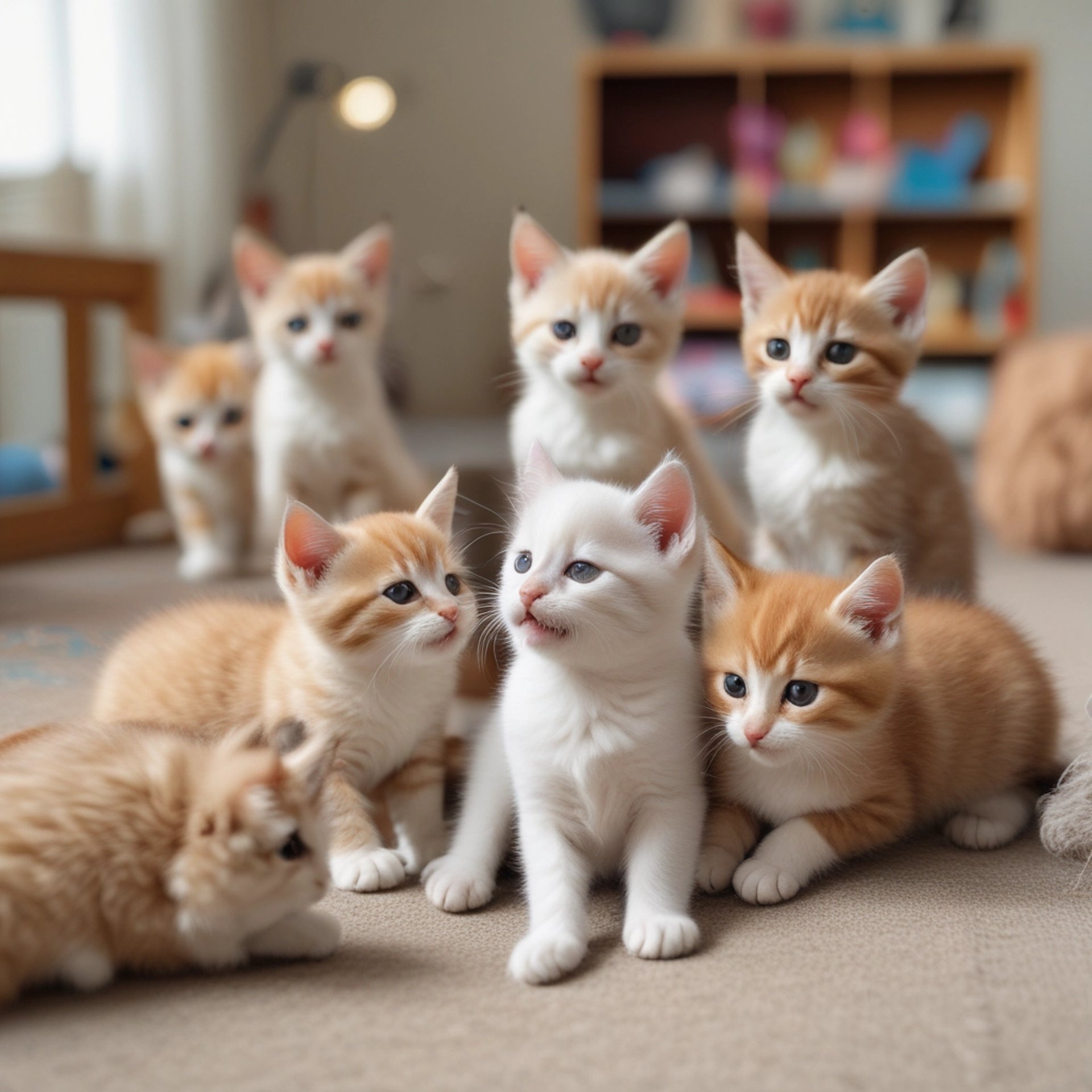
Sharing our love and knowledge about cats.
© 2025. All rights reserved.
Contact us at happycatloversjunction@gmail.com
As an Amazon Associate, I earn from qualifying purchases