Our Ever-Growing Feline Family
Real Lessons From a Lifetime of Understanding Cat Behavior
Living with cats teaches you in ways no book can fully prepare you for. The lessons arrive quietly — in small moments, repeated patterns, subtle changes, and behaviors that only begin to make sense when you learn to look beyond what the cat is doing and ask why.
After decades of sharing our home with cats of very different temperaments, one truth has become unmistakable:
No two cats behave exactly the same way, because no two cats experience the world in exactly the same way.
We’ve lived with bold explorers and cautious observers, natural hunters and determined climbers, gentle companions and mischievous troublemakers. Each brought different instincts, preferences, experiences, and needs.
Together, those cats helped shape the foundation of Cat Lovers Junction — a behavior-first approach built from decades of hands-on experience, careful observation, practical problem-solving, and continued research using reputable veterinary and feline-behavior sources.
The CLJ Method didn’t appear overnight.
It grew from the cats who taught us — and from years spent learning why their behavior makes sense.
A Tiny Kitten Found in the Woods
One of our most recent teachers arrived unexpectedly.
About two years ago, my son found a tiny kitten alone in the woods — frightened, underweight, and clearly struggling. He carried her home, and with warmth, food, security, and patience, she slowly transformed from a trembling little creature into a confident, energetic cat with a personality all her own.
Watching that transformation reinforced something years of living with cats had already taught us:
A cat’s behavior is influenced by both past experience and present environment.
Her early fear influenced her early habits. As she became more comfortable and secure, her confidence grew, her willingness to explore increased, and more of her personality began to emerge.
The changes didn't happen all at once.
They happened gradually, and paying attention to those changes taught us a great deal about how safety, familiarity, and environment can influence behavior.
The Rough-and-Tumble Sweetheart
She quickly became one of the most entertaining cats we’ve ever known.
Her favorite game is hiding behind furniture, waiting for someone to walk past, and launching a surprise “attack” on an unsuspecting leg. Yet she shows remarkable control — claws tucked away, a quick tap, and then she disappears like a tiny shadow.
What looks dramatic is usually instinctive play. Stalking, chasing, and pouncing are all behaviors connected to a cat's natural predatory sequence.
Living with her reinforced a principle that has become central to the way we approach behavior at Cat Lovers Junction:
Don’t judge a behavior only by how it looks. Ask what’s driving it.
When play is the underlying motivation, appropriate outlets, predictable routines, and opportunities to stalk, chase, and pounce can help redirect that energy into safer, more acceptable behavior.
And when her energy fades, she becomes a different cat entirely — settling beside us, chirping softly, and communicating through body language, eye contact, quiet purrs, and gentle nudges.
She rarely needs a meow to make herself understood.
Zamzam: Where Our Story Began
Long before the kitten in the woods, there was Zamzam.
Gentle, curious, and always searching for a sunny place to nap, she was the cat who began our family’s long education in feline care and behavior.
One day she returned from an outdoor adventure looking noticeably different.
She was pregnant.
Soon our home was filled with kittens — tiny explorers learning to walk, play, climb, interact, and discover the world around them.
Caring for that litter gave us firsthand experience with early feline development. We watched individual personalities emerge, saw how kittens learned through play and interaction, and discovered how differently cats can develop and behave even when growing up in the same home.
It also taught us the realities of an unplanned litter and gave us a lasting appreciation for responsible spaying and neutering.
Those kittens weren’t simply pets.
They became some of our earliest lessons in how individual cats really are.
Major Tom: The Fearless Hunter
Major Tom taught us an entirely different set of lessons.
Athletic, alert, and intensely responsive to movement, he was a natural hunter. Birds, insects, mice — if it moved, he noticed.
He demonstrated something that is also well established in our understanding of feline behavior:
Predatory behavior isn't driven by hunger alone.
A well-fed cat can still be strongly motivated to stalk, chase, pounce, and capture.
Major Tom shaped the way we think about play today.
Effective play isn't simply entertainment or a way to tire a cat out. It can provide an appropriate outlet for behaviors cats are naturally motivated to perform.
He also taught us firsthand about the risks associated with unsupervised outdoor life and strengthened our preference for safer ways to give cats opportunities for activity, exploration, and stimulation.
Juniper the Climber
Then came Juniper.
If there was a high point in the house, she considered reaching it a personal mission.
Refrigerators, cabinets, shelves, curtain rods — nothing seemed off-limits.
Constantly trying to stop her from climbing would have meant fighting against something she was strongly motivated to do.
So we learned to ask a different question:
What is the cat trying to accomplish — and how can we give them an acceptable way to do it?
Cat trees, elevated resting areas, window perches, and other vertical spaces gave Juniper better choices.
Her behavior reinforced another principle that eventually became part of the CLJ Method:
When a cat repeatedly performs a behavior, there is usually something motivating or reinforcing it. Understanding that can help us choose a better response.
What Decades of Living With Cats Have Taught Us
Every Cat Is an Individual
Temperament, age, health, history, environment, and previous experiences can all influence behavior.
A solution that works beautifully for one cat may accomplish very little with another.
That's why we don't begin with the assumption that every scratching problem, hiding cat, nighttime disturbance, or litter box issue has the same cause.
Behavior Is Information
Scratching, hiding, vocalizing, nighttime activity, rough play, litter box problems, and other behaviors don't occur in isolation.
They can provide clues about what a cat wants, needs, has learned, or may be experiencing.
The behavior tells us where to start looking. It doesn't always tell us the answer.
Observation Matters
One of the most valuable things years of living with cats teaches you is what is normal for your cat.
Changes in eating, drinking, grooming, sleeping, activity, social behavior, temperament, or litter box habits can sometimes be early indications that something has changed.
Not every behavioral change means something is medically wrong. But sudden, significant, or unexplained changes deserve attention, particularly when they occur alongside other symptoms.
Knowing when a behavior problem may require veterinary attention is just as important as knowing what can reasonably be addressed at home.
The Environment Shapes Behavior
Cats experience a home differently than people do.
Territory, routines, scratching opportunities, movement and play, resting places, litter box conditions, interactions with other animals, and safe places to retreat can all influence behavior.
That is why changing the environment is often an important part of changing what happens next.
Natural Behavior Needs an Outlet, Not Punishment
Cats scratch. They climb. They stalk. They chase. They hide. They seek territory.
These aren't character flaws.
Years of living with cats have taught us that working with natural feline behavior and providing acceptable ways to express it is usually far more productive than simply trying to make the behavior disappear.
Cats Communicate in Subtle Ways
A slow blink, a tail position, a head bump, a change in posture, choosing to sleep nearby, following you from room to room, or suddenly withdrawing can all communicate something.
Some cats are extremely vocal. Others barely make a sound.
Learning to notice those differences can completely change the way you interpret a cat's behavior.
Passing On What We’ve Learned
Cat Lovers Junction grew from these experiences.
After decades of living with cats, one lesson stands above the rest:
Don’t look only at the behavior. Look at the cat — and the circumstances behind the behavior.
A cat scratching the sofa isn't trying to ruin furniture.
A cat waking you at 4 a.m. isn't plotting against your sleep.
A cat hiding under the bed isn't simply being difficult.
There is usually a reason the behavior makes sense to the cat.
Finding that reason — or narrowing down the most likely possibilities — is often the first step toward finding a practical solution.
That thinking became the foundation of the CLJ Method: observe what is happening, look at the circumstances surrounding the behavior, consider the cat's needs and environment, identify likely causes, and choose a response that addresses the problem while respecting natural feline behavior.
We're still learning.
That's important, because credible advice about cats shouldn't come from believing you already know everything.
Every new cat brings a different personality, different habits, and sometimes an entirely new problem to solve. New research can also change what we know about feline health and behavior.
Experience gives us a foundation.
Continuing to learn makes that experience more useful.
About the Author
I created Cat Lovers Junction after decades of living with, caring for, and learning from cats with very different personalities, histories, and behaviors.
Over the years, I've dealt firsthand with many of the same problems cat owners come to Cat Lovers Junction trying to solve — scratching, hiding, nighttime activity, feeding issues, litter box problems, anxiety and stress, rough play, environmental challenges, and behavior changes that left us wondering what had changed and what we should do next.
That experience taught me something important:
The behavior you see is often only the beginning of the problem-solving process.
My approach combines long-term hands-on experience with careful observation and continued study of reputable veterinary, feline-health, and feline-behavior information. I compare what reliable sources tell us about cats with the realities of living with them every day and turn that information into practical steps owners can actually use at home.
I am not a veterinarian or a veterinary behaviorist, and Cat Lovers Junction does not replace professional veterinary care.
My role is different.
I take established information about feline behavior, health, natural instincts, and the environment and make it easier for everyday cat owners to apply that information to the problems happening in their own homes.
That approach ultimately became the CLJ Method — a practical, behavior-first framework that starts with observation rather than assumptions.
Instead of asking only:
“How do I stop this behavior?”
we begin by asking:
“Why might my cat be doing this?”
Then we look at the pattern, the circumstances, the cat's environment and daily needs, possible health concerns, and the most practical ways to respond.
My goal isn't to convince cat owners that there is one solution for every cat.
It's to help them observe more carefully, recognize the most likely factors influencing a behavior, know when veterinary help may be appropriate, and make better-informed decisions about what to try next.
Because after decades of living with cats, one thing has become very clear:
The more closely you pay attention to a cat, the more that cat can teach you.
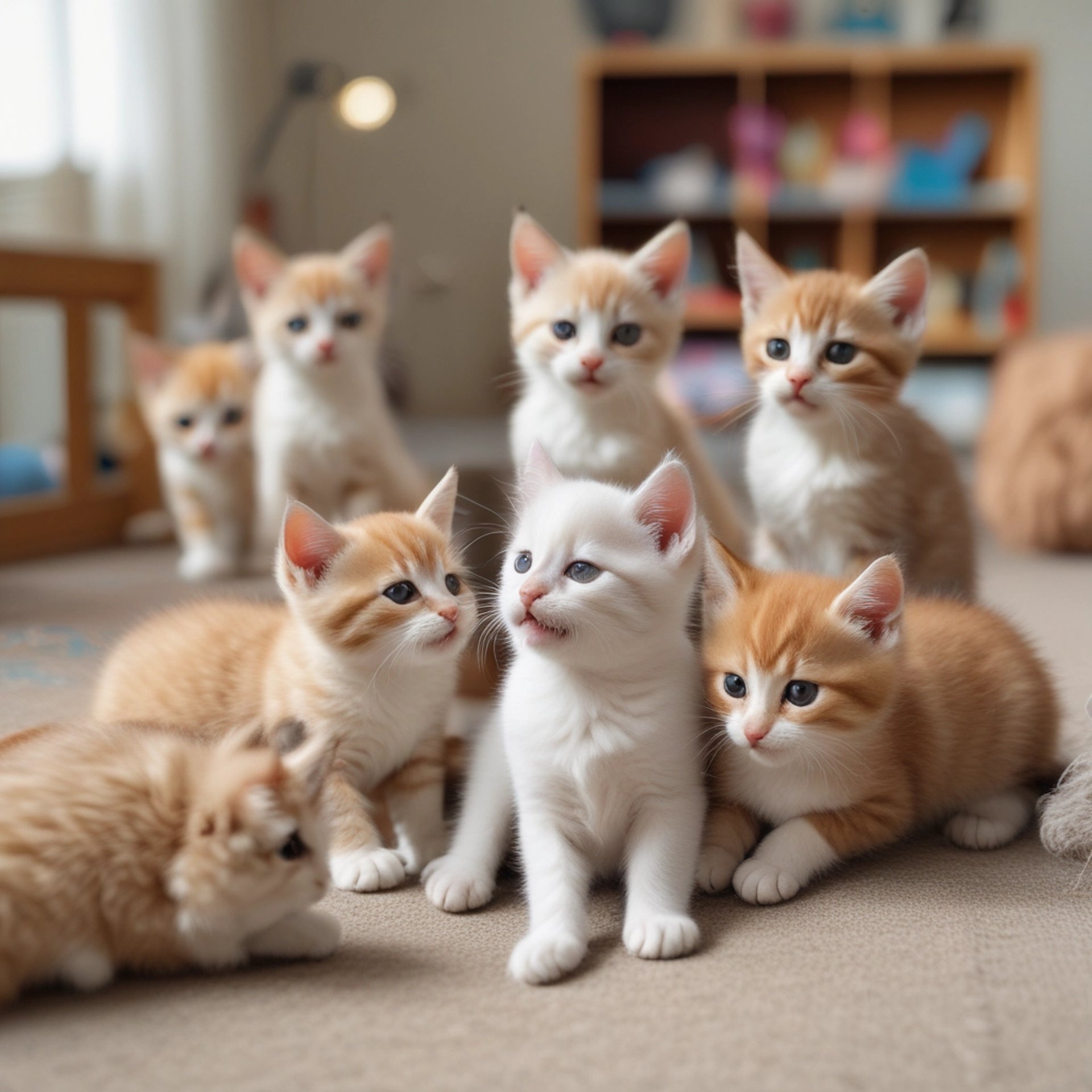
Sharing our love and knowledge about cats.
© 2026. All rights reserved.